Anevo is an academic search platform that connects students and institutions. Built with Next.js, NestJS, and PostgreSQL.
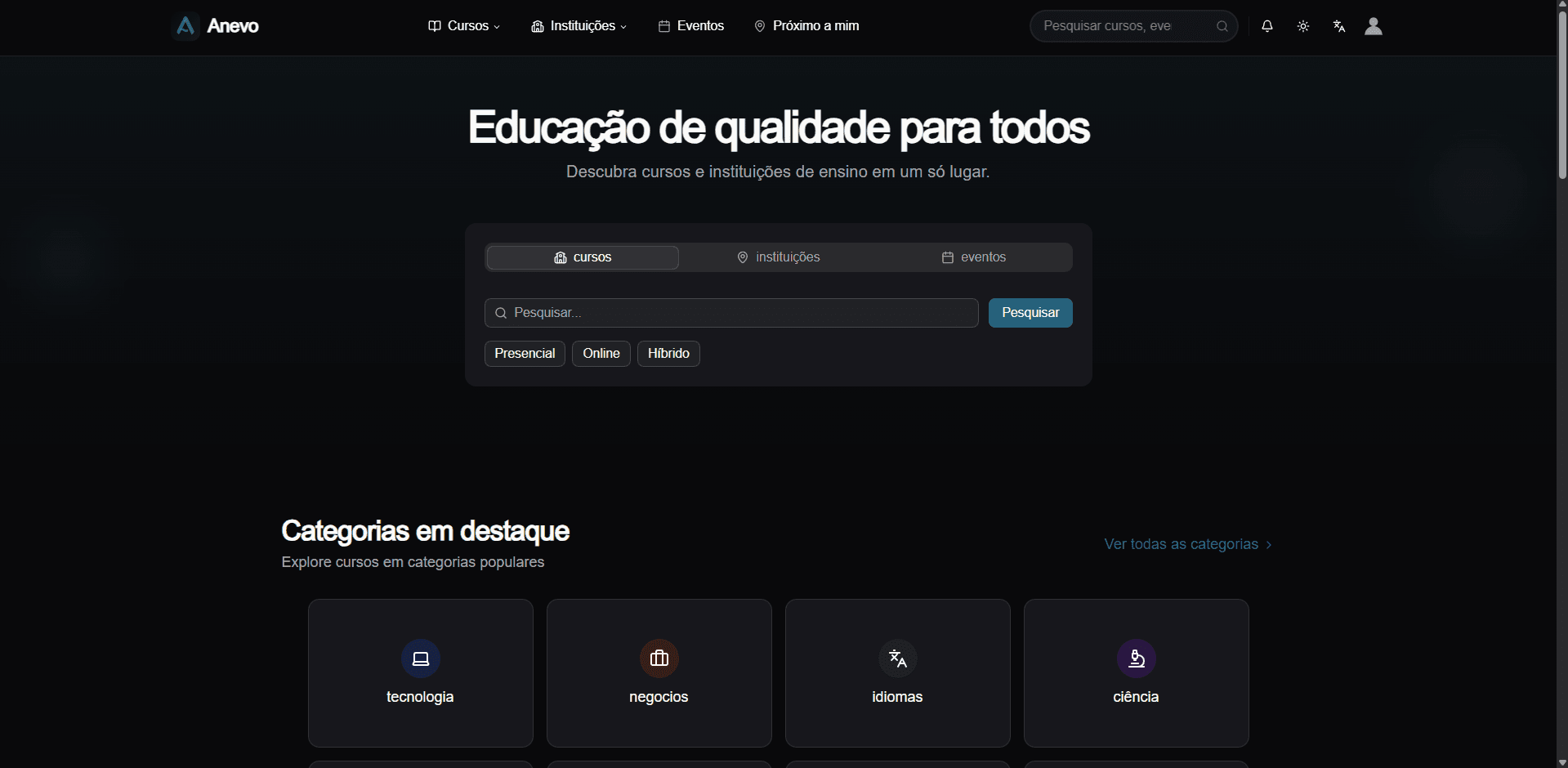
Anevo is an academic search platform that I developed entirely on my own, from scratch to production deployment. From the initial idea and scope definition, user experience design, software architecture, frontend and backend implementation, to infrastructure configuration and monitoring, the entire cycle was handled by me. The product's objective is to be an academic "hub": a place where students can find courses, events, institutions, and educational opportunities in a centralized way, focusing on relevance, geolocation, and usability.
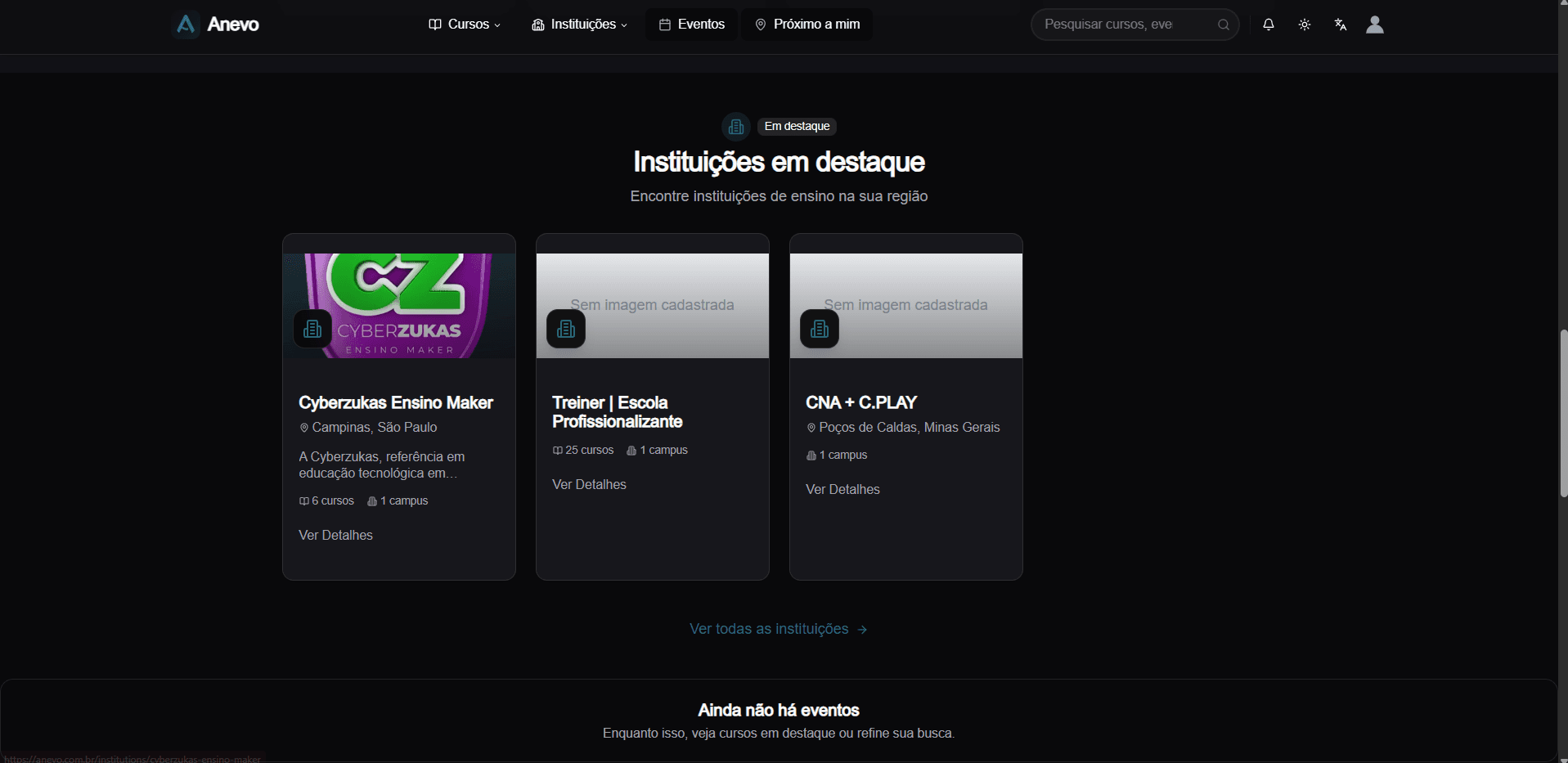
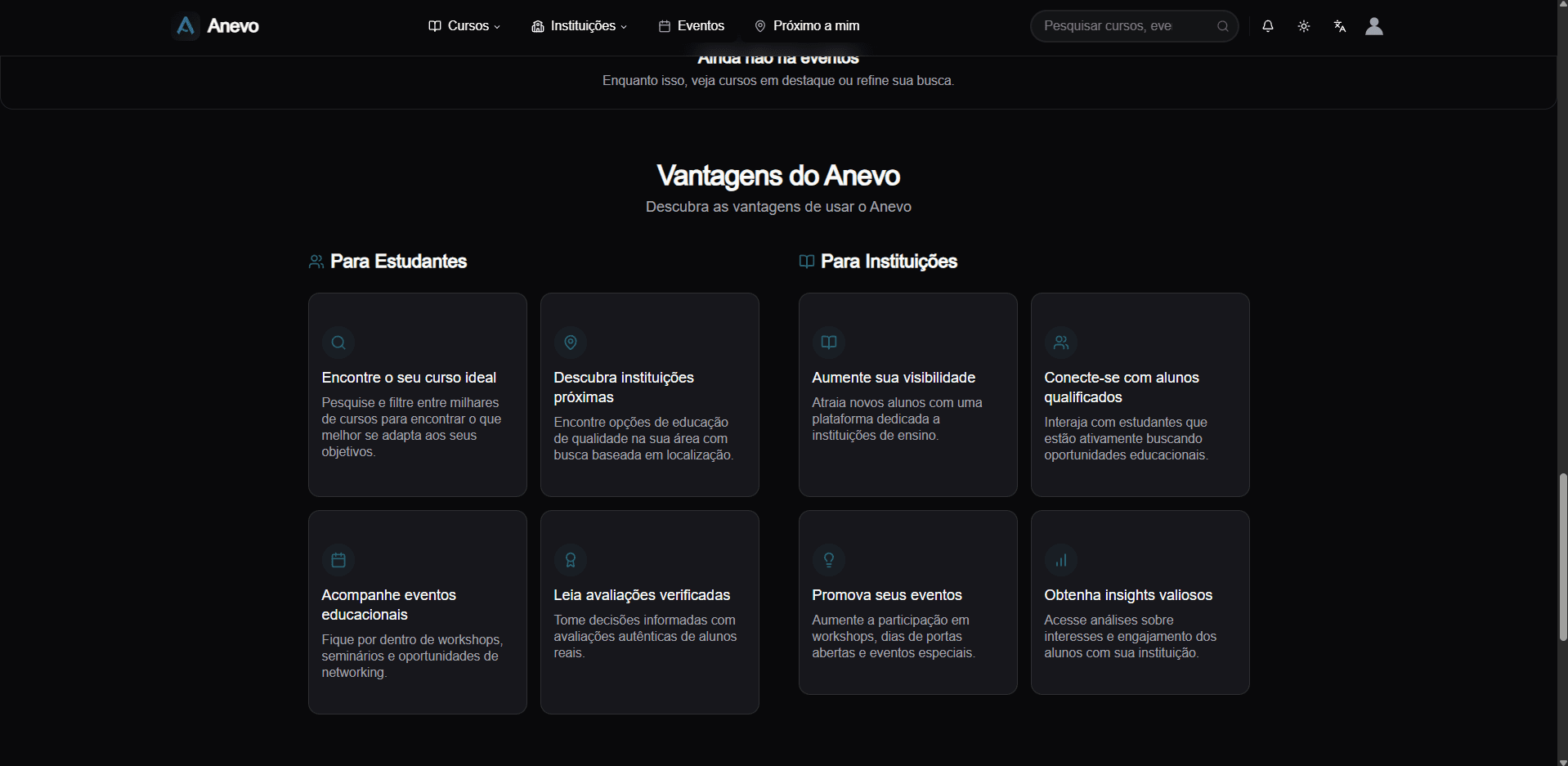
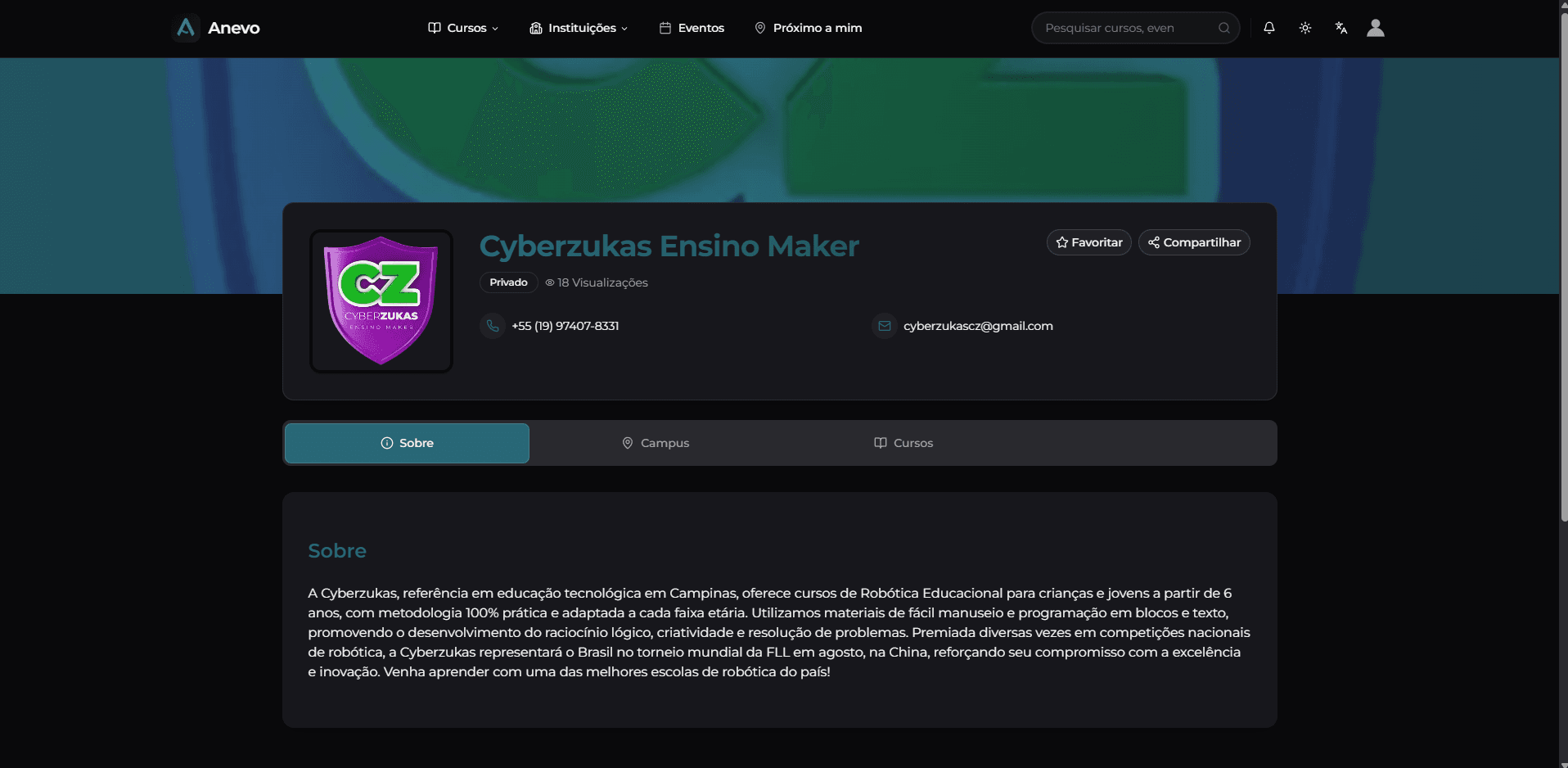
In practice, Anevo allows users to search for institutions and courses with advanced filters (area, modality, location, price range, workload, etc.), view complete details, and save favorite opportunities. On the institutions' side, there is a dashboard designed for profile management, publishing and updating offers, as well as support for different subscription plans, ranging from free to paid plans with greater visibility on the platform. The idea is to position Anevo as a SaaS that generates value for both those seeking education and those who need academic visibility.
Technically, the frontend was built with Next.js, leveraging SSR/SSG for performance and SEO, while the backend uses NestJS organized into domain modules, which facilitates maintenance and evolution. Data is persisted in PostgreSQL, and fast, faceted searches are performed with Meilisearch, ensuring quick responses even with many records. The project also uses Redis for caching and performance optimization in critical operations, as well as queues and session control in specific parts of the system. Monetization is integrated via Stripe, allowing for recurring plans and a scalable business model.
An important aspect of this project is the learning experience in end-to-end architecture and operation: in addition to writing code, I had to deal with version control, CI/CD, environment configuration, basic security, log organization, and scalability strategies. Among the challenges, the modeling of a complex domain (courses, institutions, plans, location, events) and the cohesive integration between Next.js, NestJS, Meilisearch, Redis, and Stripe stand out. The result is a product that not only solves a real problem in academic research, but also consolidates in practice my experience in building and deploying a complete platform, all by myself.



 Nelson Christovam Neto